2,081
Evaluated cases
Retrospective, prospective, multicenter, and PubMed-derived AIS scenarios.
Journal of Medical Internet Research, 2026
A structured, auditable LLM workflow for guideline-concordant AIS treatment recommendation, TOAST classification, safety assessment, and human-AI clinical validation.
Abstract
Acute ischemic stroke treatment selection requires rapid integration of clinical, imaging, and laboratory information, including therapeutic windows, contraindications, stroke severity, and imaging eligibility. This process is expertise-dependent and vulnerable to safety-critical errors.
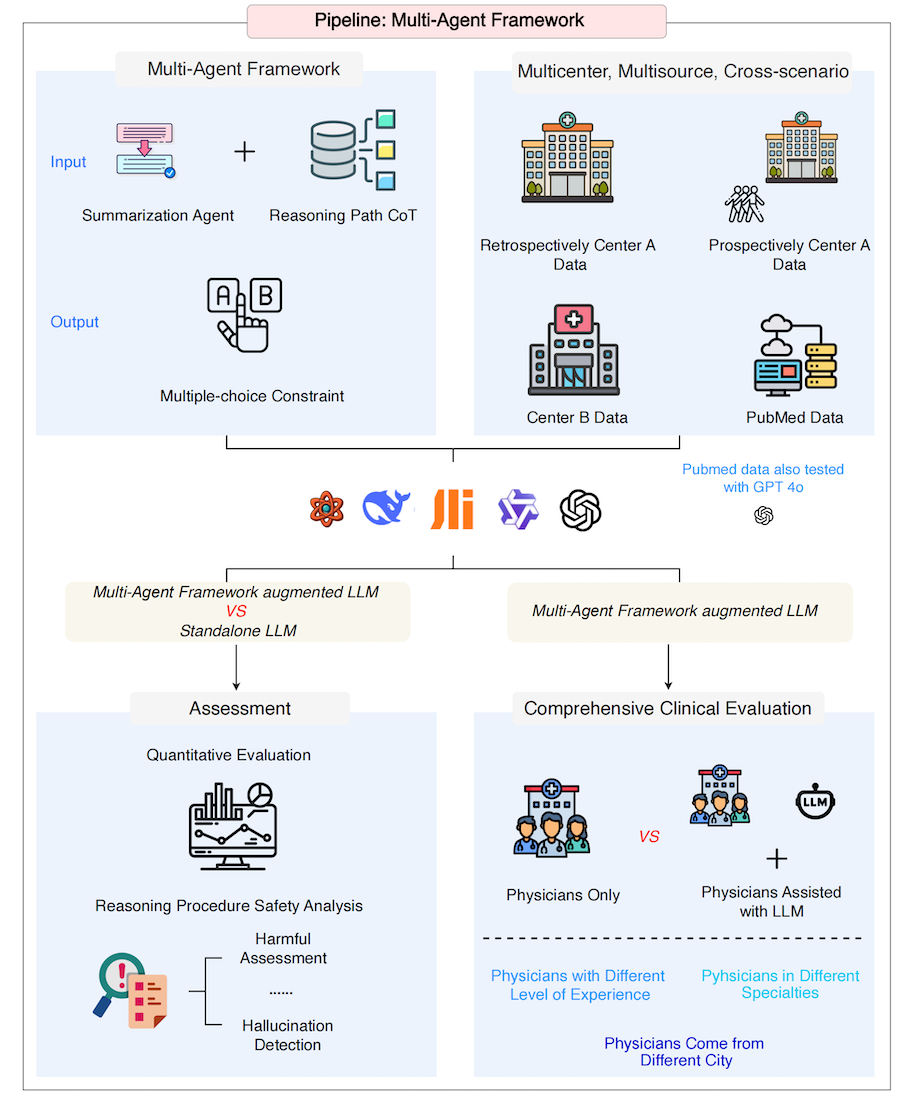
HR-LLM-Stroke develops and validates a structured multi-agent LLM framework for real-world AIS decision support. The framework combines a workflow-oriented summarization agent, guideline-concordant reasoning-path CoT, and a multiple-choice constraint agent to generate treatment recommendations and TOAST subtype classifications with auditable intermediate outputs.
Framework
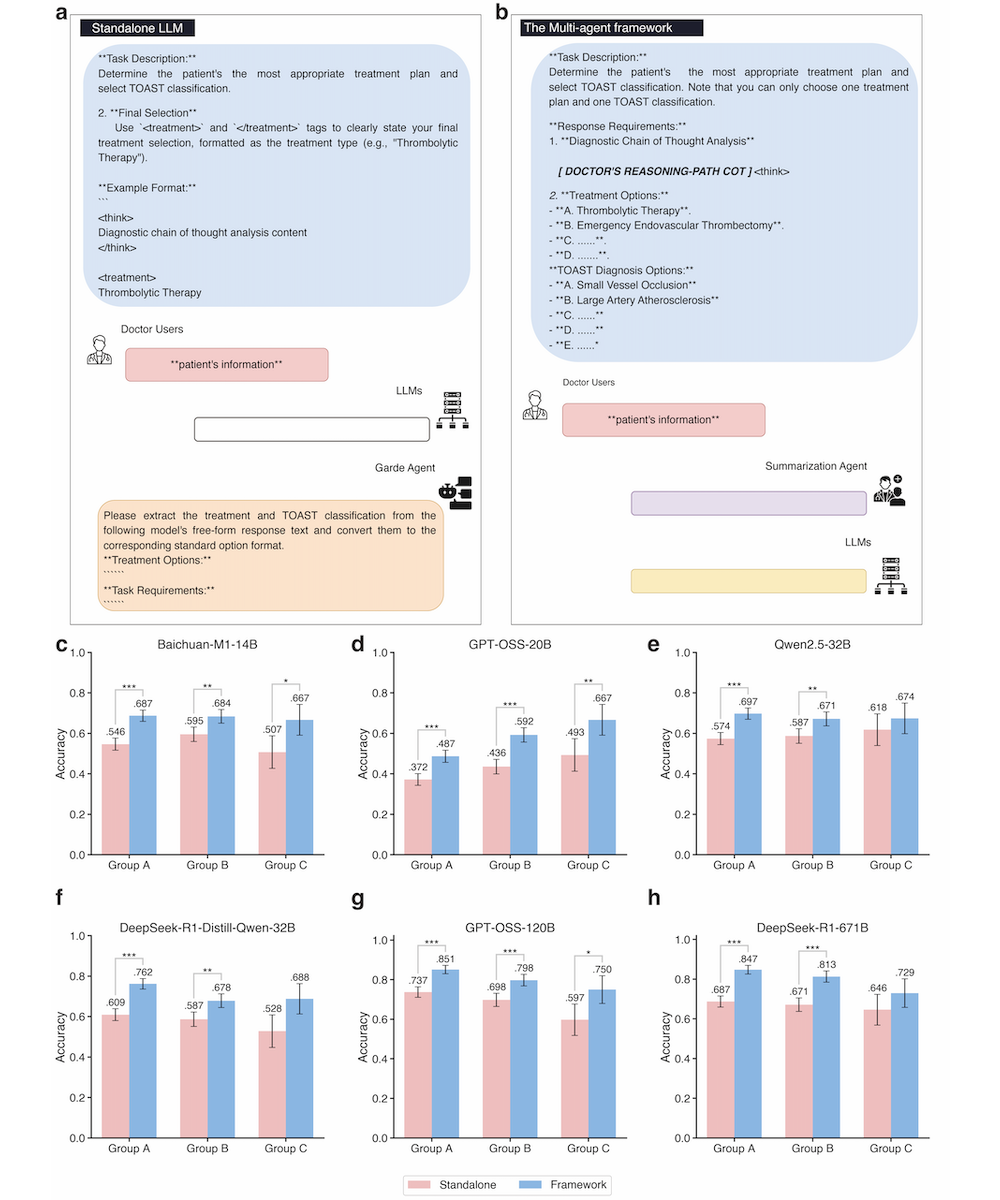
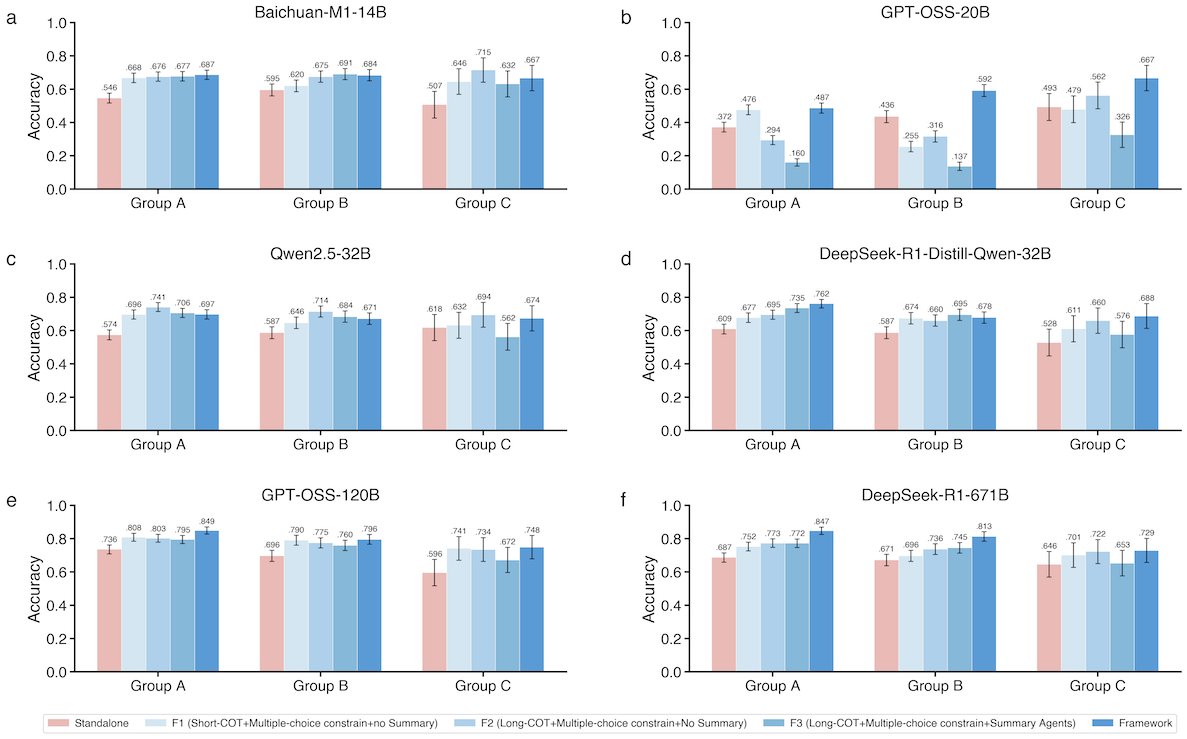
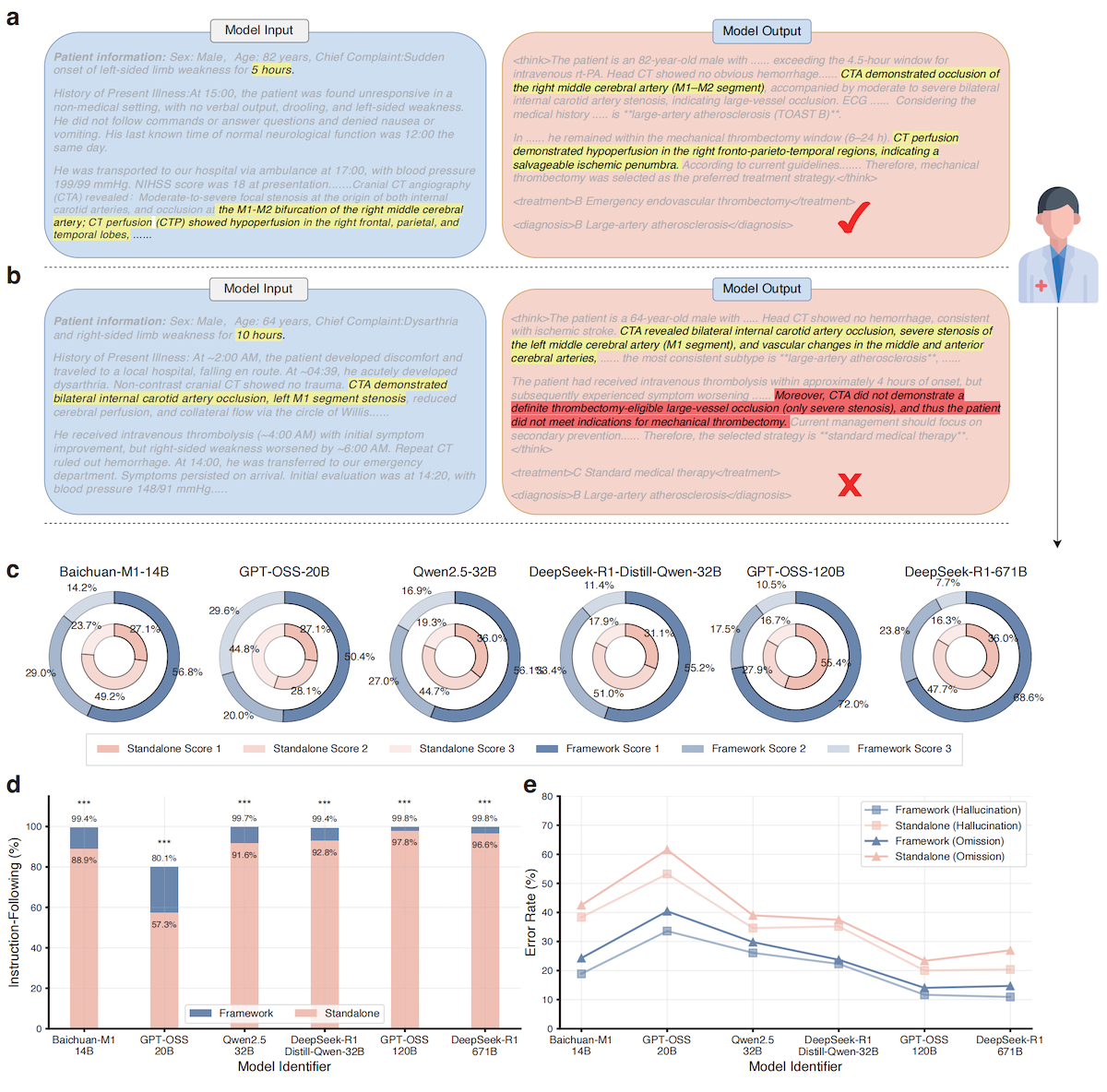
The public release supports two reproducible inference modes: a standalone LLM baseline and the framework-augmented workflow. The framework first summarizes long clinical narratives, then applies guideline-oriented reasoning, and finally constrains the answer to clinically interpretable options.
Extracts AIS-relevant evidence from lengthy case narratives.
Enforces concise, guideline-concordant diagnostic and treatment reasoning.
Maps outputs to treatment and TOAST categories for consistent evaluation.
Main Results
2,081
Retrospective, prospective, multicenter, and PubMed-derived AIS scenarios.
+18.9%
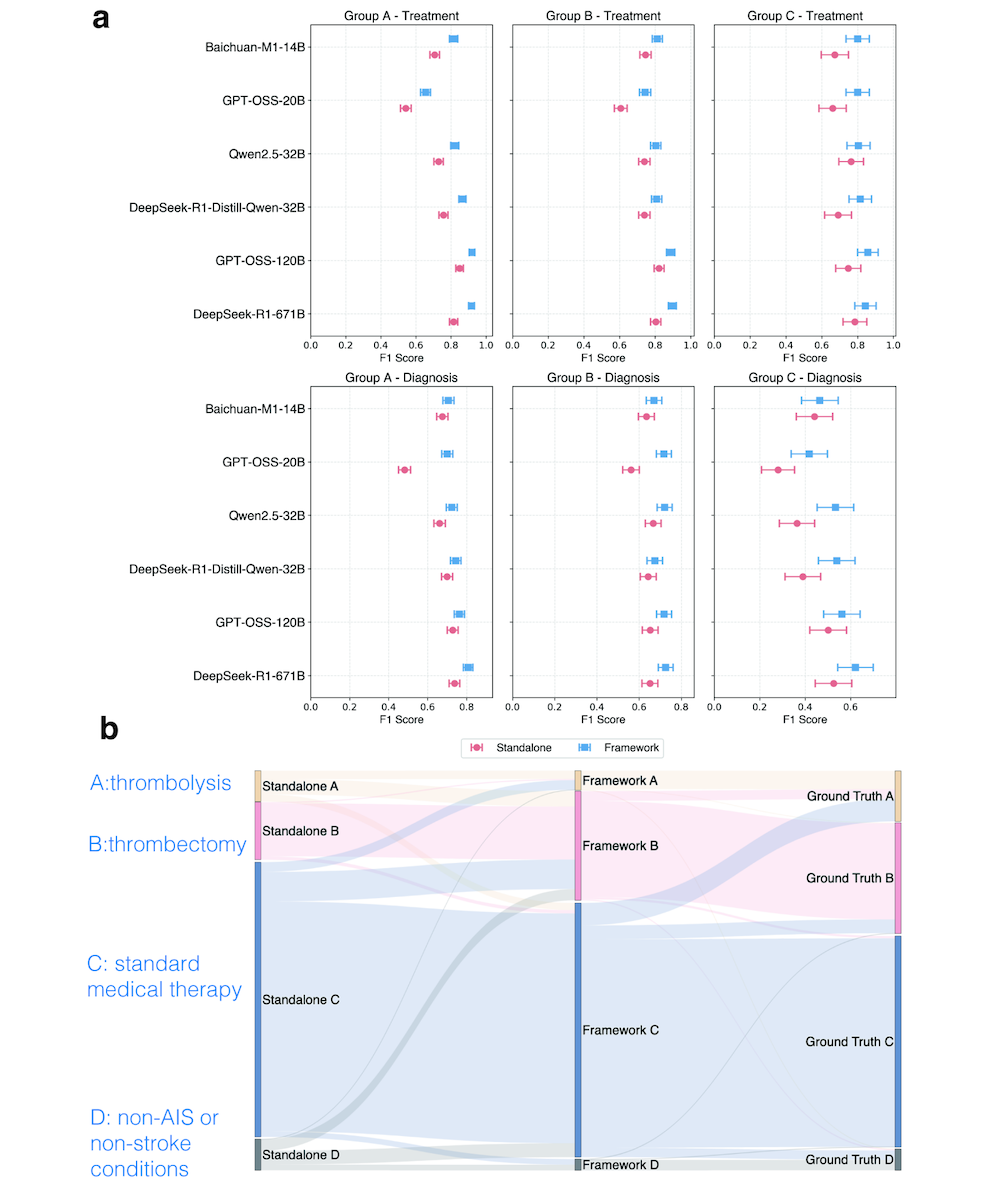
Mean framework improvement over standalone LLMs in treatment recommendation experiments.
0.687 -> 0.847
Treatment recommendation accuracy increased with framework augmentation.
4.7% -> 3.1%
Framework outputs reduced hallucination rate versus standalone outputs.
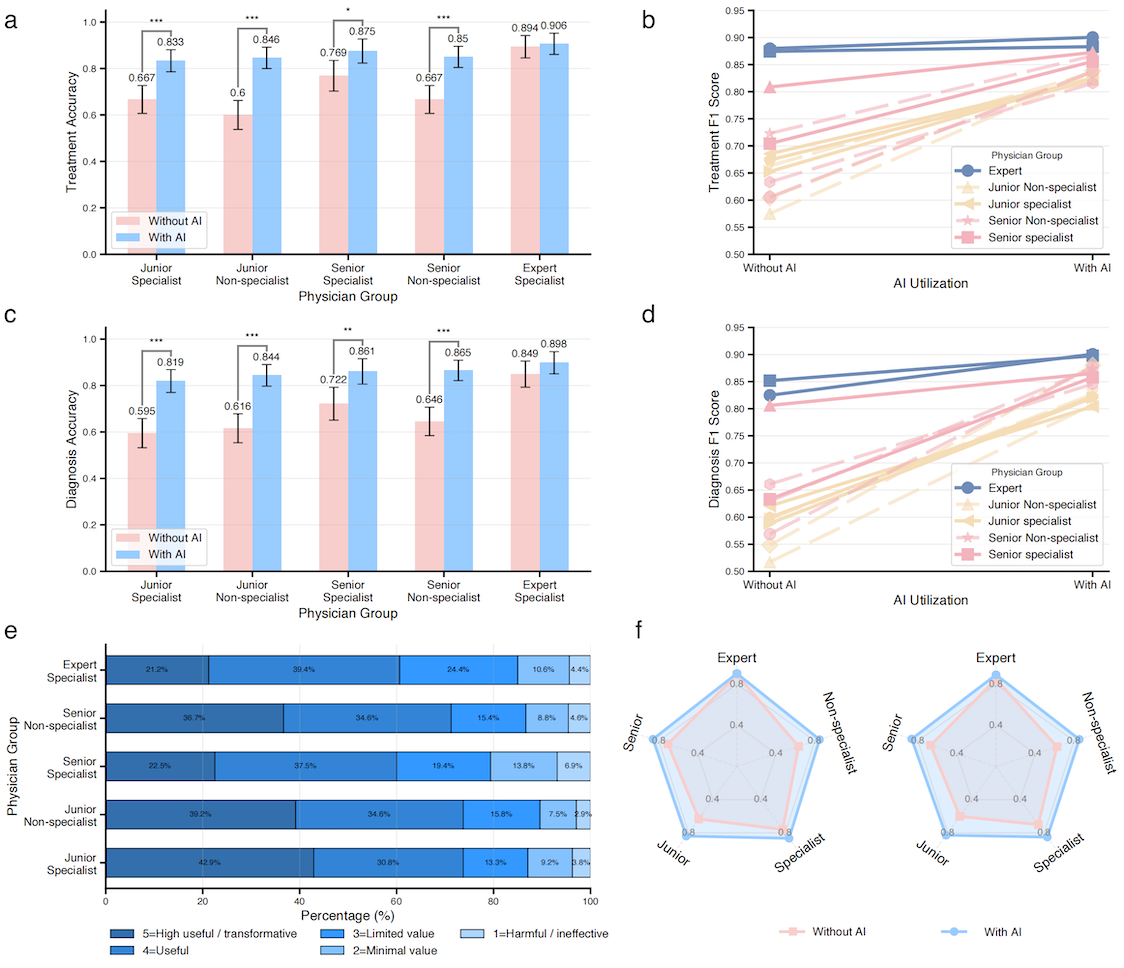
0.600 -> 0.846
Physician treatment decision accuracy improved under AI assistance.
0.667 -> 0.833
AI assistance delivered large gains for less-experienced clinicians.
Figures
Open Release
The repository provides prompt templates, batch inference scripts, a public example case, example outputs, and a lightweight exact-match evaluator. Private clinical datasets and production clinical deployment code are not included.
Citation
@article{yan2026hrllmstroke,
  title = {A Multi-Agent Large Language Model Framework for Emergency Treatment Recommendation in Acute Ischemic Stroke: Development and Validation Study},
  author = {Yan, Bicong and Zhang, Ruipeng and Fan, Yanfeng and Li, Ying and Chen, Li and Song, Xinyu and Tang, Yixiao and Cao, Zhongzheng and Shen, Li and Wang, Mengfei and Li, Zhuo and Xiong, Yijia and Li, Yuehua},
  journal = {Journal of Medical Internet Research},
  year = {2026},
  doi = {10.2196/96304},
  note = {Epub ahead of print, June 23, 2026}
}